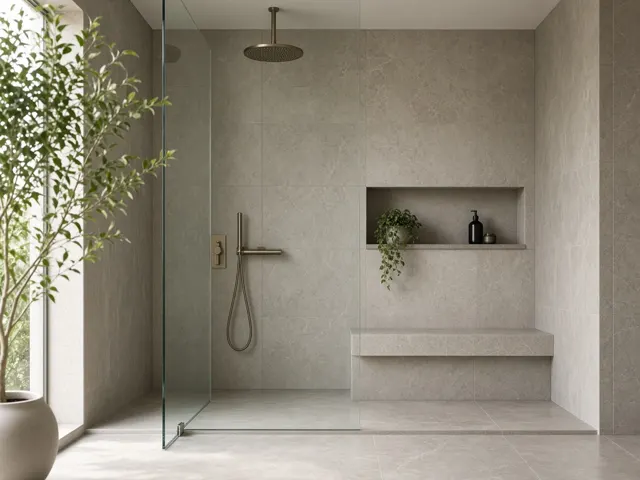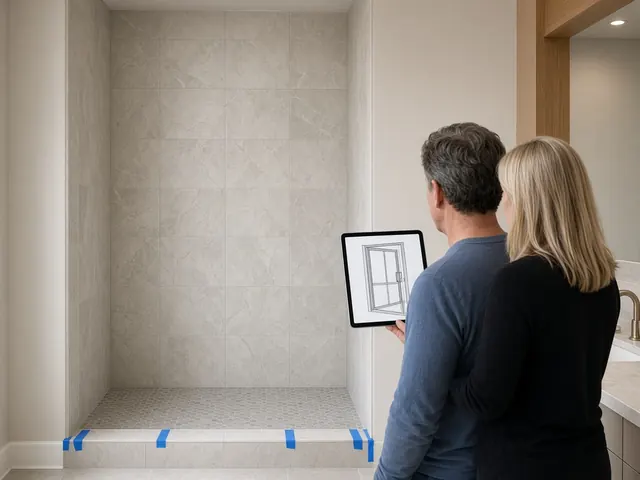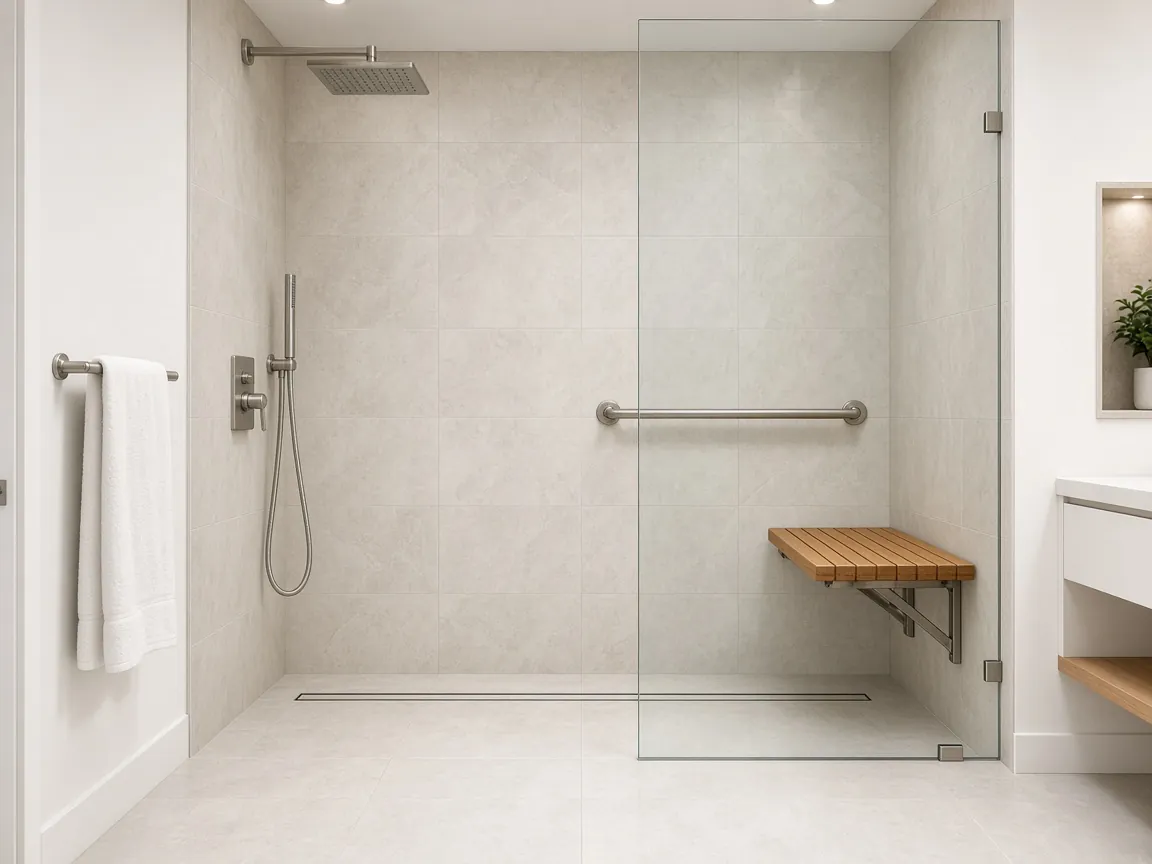
For many families the goal is a shower that is safe now and later: no curb to trip over, room to turn, something solid to hold and a seat. Glass can still be part of that, as long as it doesn't narrow the entry.
Planning priorities
- Step-free entry: a curbless or low-threshold floor with a linear or properly sloped drain.
- Clear entry width: keep the opening generous; fixed panels instead of doors often work best.
- Grab bars and a seat: walls need blocking before tile.
- Hand shower on a slide bar, reachable when seated.
What the ADA Standards cover
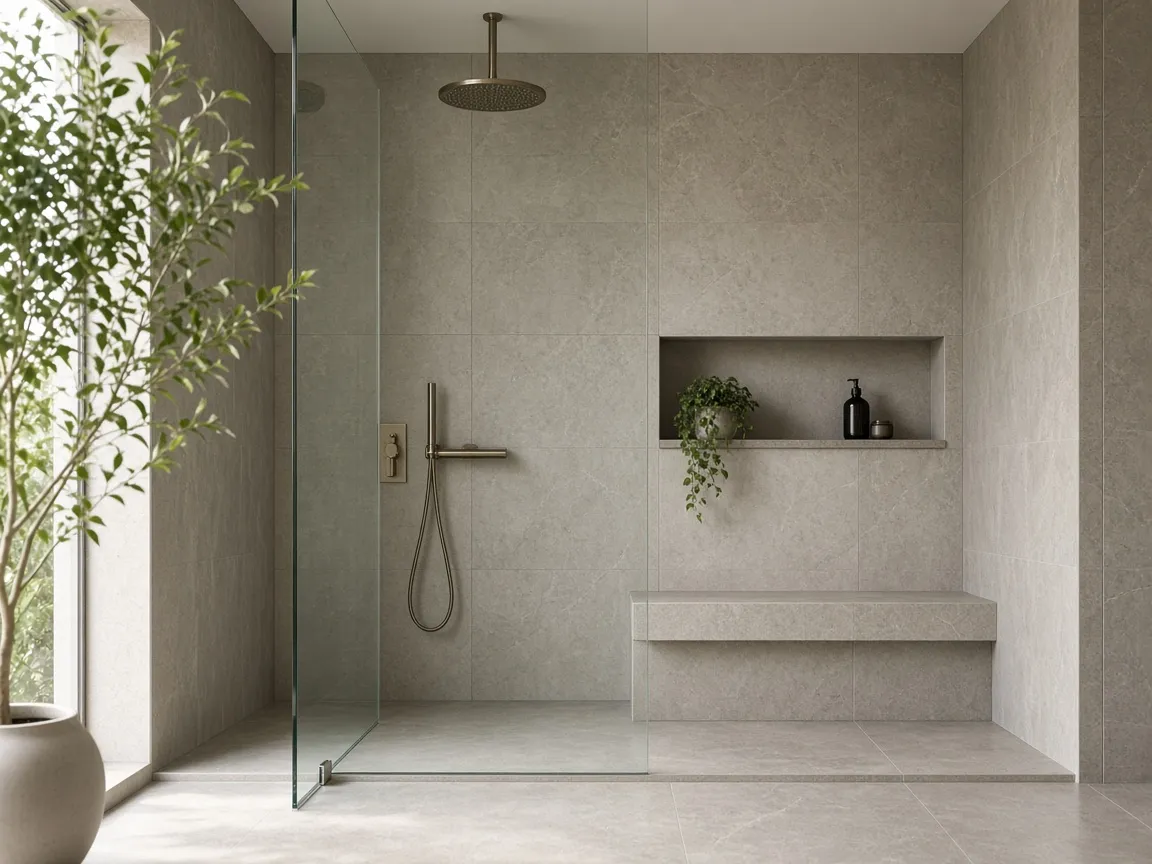
The 2010 ADA Standards for Accessible Design set requirements for showers in public accommodations and other covered facilities, including transfer and roll-in shower dimensions, grab bars, seats and controls. Private homes are generally not required to meet them, but many families use them as a helpful reference. The U.S. Access Board publishes a plain-language guide.
Frequently asked questions
Do I need to follow ADA rules in my home?
Generally no for private homes, but the ADA Standards are a useful reference for dimensions, grab bars and seats.
Can a curbless shower have glass?
Yes. A fixed panel or a door that swings out over a properly drained floor is common.