What the rules say
Model building codes treat glazing in shower and bathtub enclosures as a hazardous location that requires safety glazing. The federal safety standard for architectural glazing materials, 16 CFR Part 1201, covers glazing used in products including shower and bathtub doors and enclosures. In practice, shower doors and panels are tempered glass that meets these tests.
Look for the mark
Tempered safety glass carries a permanent mark, often called the "bug", usually in a corner. It identifies the manufacturer or fabricator and the standard the glass meets. If you can't find one on an existing enclosure, ask a glass professional to check it.
Breakage
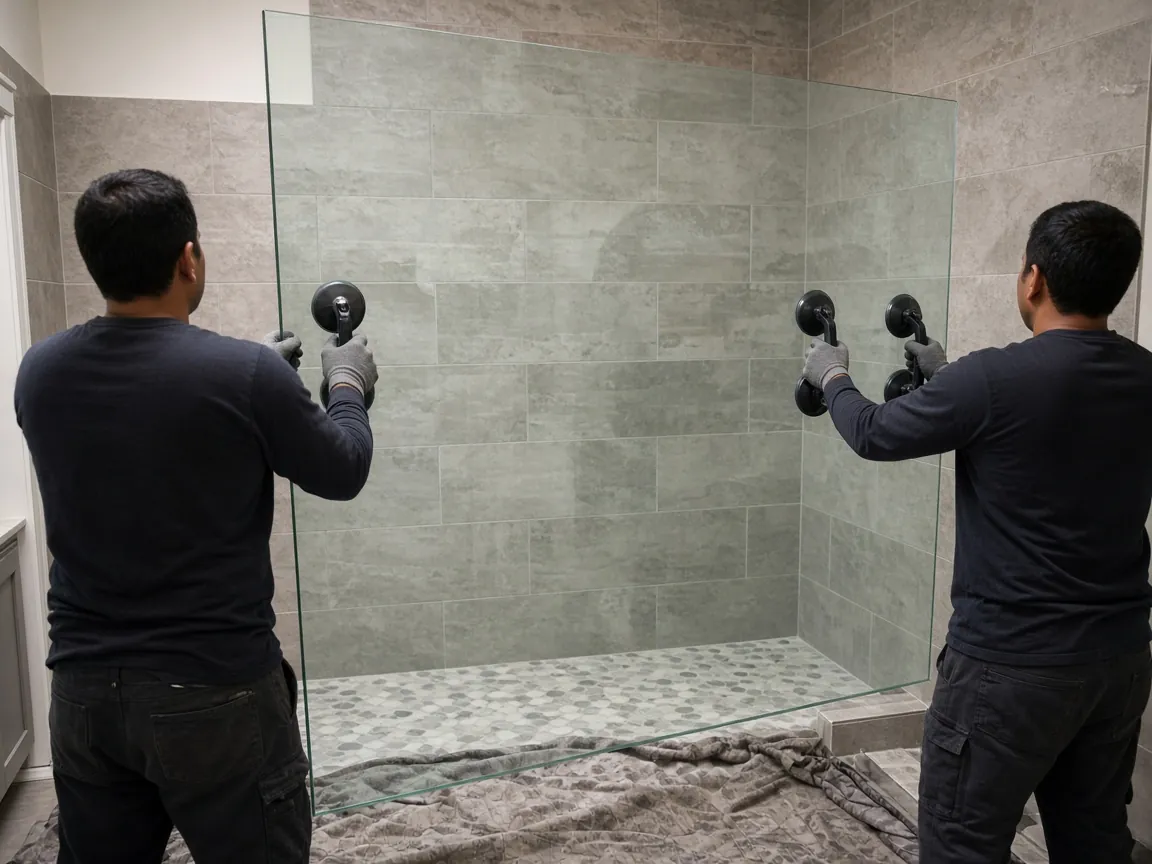
Tempered glass is several times stronger than ordinary annealed glass and breaks into small, blunt pieces. Rarely, it can break without an obvious cause, often from edge damage or tiny inclusions. Avoid knocking edges with tools or heavy objects, and replace chipped panels.
Care tips
- Don't let the glass touch tile or metal directly; it should sit on setting blocks and gaskets.
- Keep hinges adjusted so the door doesn't strike the panel.