What makes an enclosure "frameless"
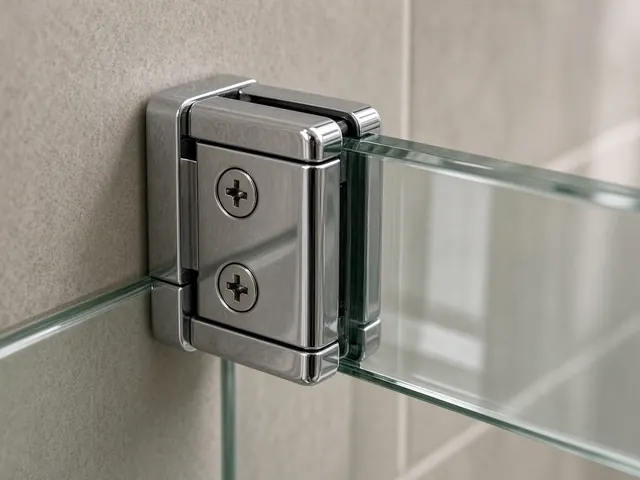
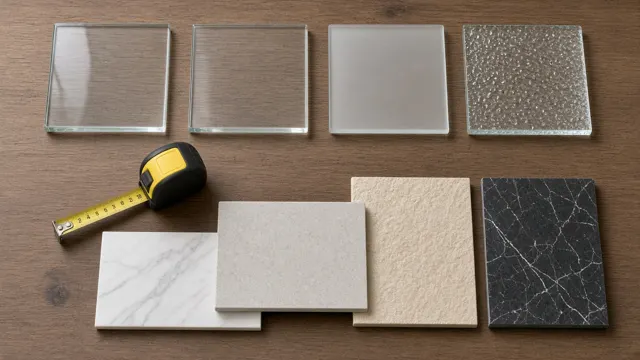
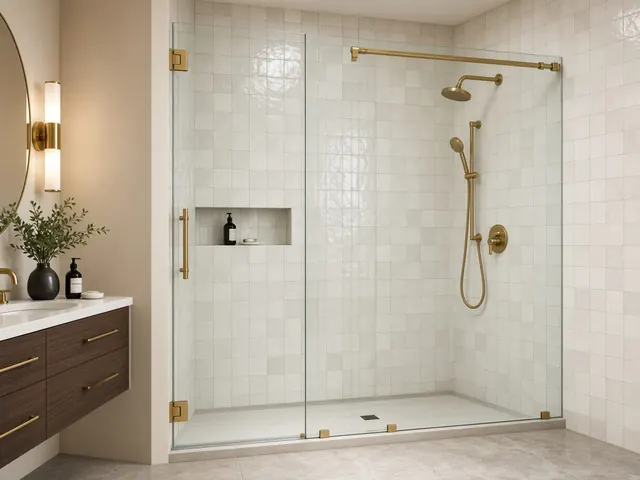
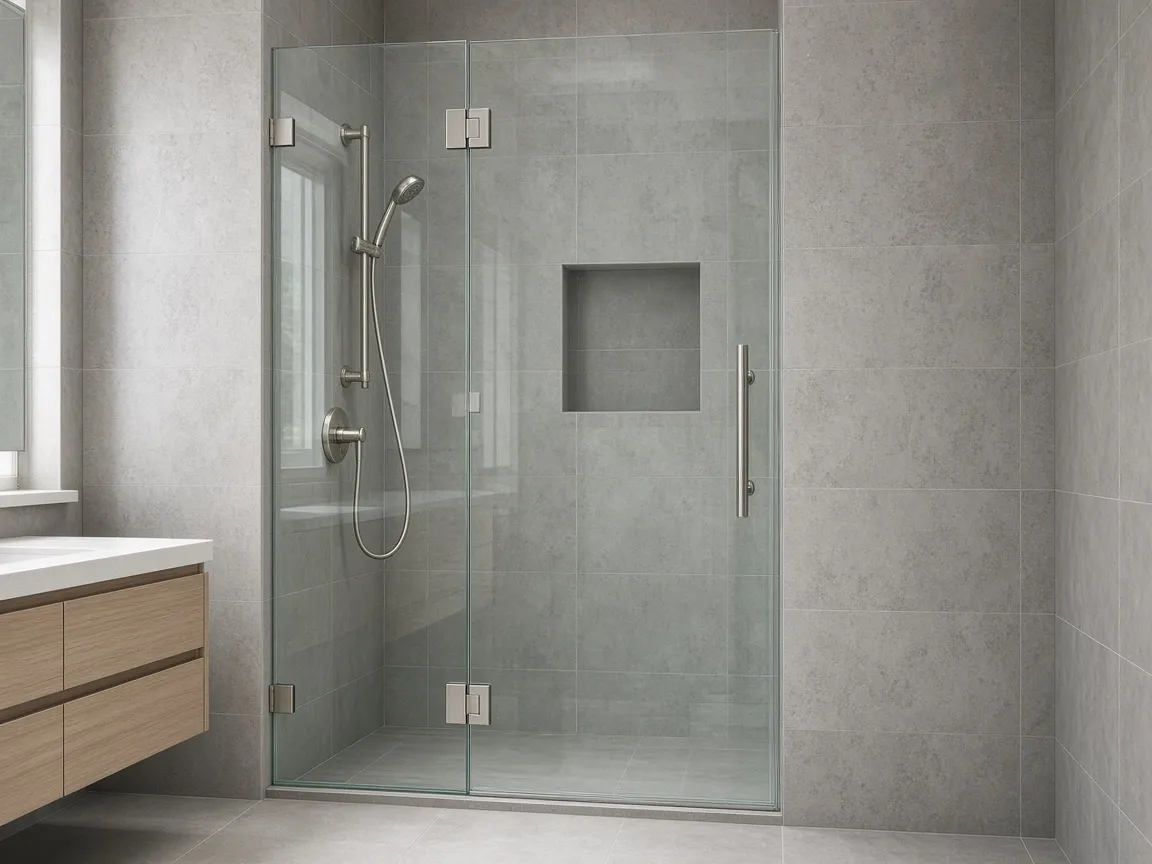
Frameless enclosures use heavy tempered glass, typically 3/8-inch (10 mm) or 1/2-inch (12 mm), that is strong enough to stand without a surrounding metal frame. Panels are held by small clamps or a slim U-channel, and the door hangs on wall-mounted or glass-to-glass hinges.
Common configurations
- Door only: for alcoves up to about 36 inches wide.
- Door + inline panel: for wider alcoves.
- Door + panel + return (90°): for corner showers.
- Neo-angle: see our neo-angle guide.
- Steam showers: full-height glass with a transom and sealed door.
3/8 inch or 1/2 inch?
3/8-inch glass is the industry standard and works for most doors. 1/2-inch feels more substantial and suits very wide or tall doors, but it's heavier (about 6.5 lb per square foot), needs stronger hinges and solid blocking in the wall, and costs 15–25% more.
Do frameless showers leak?
Frameless doors have small gaps (typically 3/16 inch) around the edges so the door can swing. Clear vinyl sweeps and seals control water, but they aren't completely watertight. Point the showerhead away from the door, make sure the curb slopes toward the drain, and expect the occasional drip.
Typical costs
| Configuration | Typical installed US cost |
|---|---|
| Single door | $900–$1,800 |
| Door + inline panel | $1,500–$3,000 |
| Corner (door + panel + return) | $2,200–$4,500 |
| Steam enclosure | $3,500–$7,000+ |
Frequently asked questions
Is frameless glass safe?
Yes, when it's tempered safety glass installed with proper hardware into solid backing. Tempered glass is about four times stronger than regular glass, and if it breaks it crumbles into small pieces rather than sharp shards.
Are frameless doors harder to clean?
They're easier. With no frame tracks or rubber gaskets, there are fewer places for soap scum and mildew to build up.